-
Matriculated

One of the baker’s dozen
-
Follow Up No Fatsoes
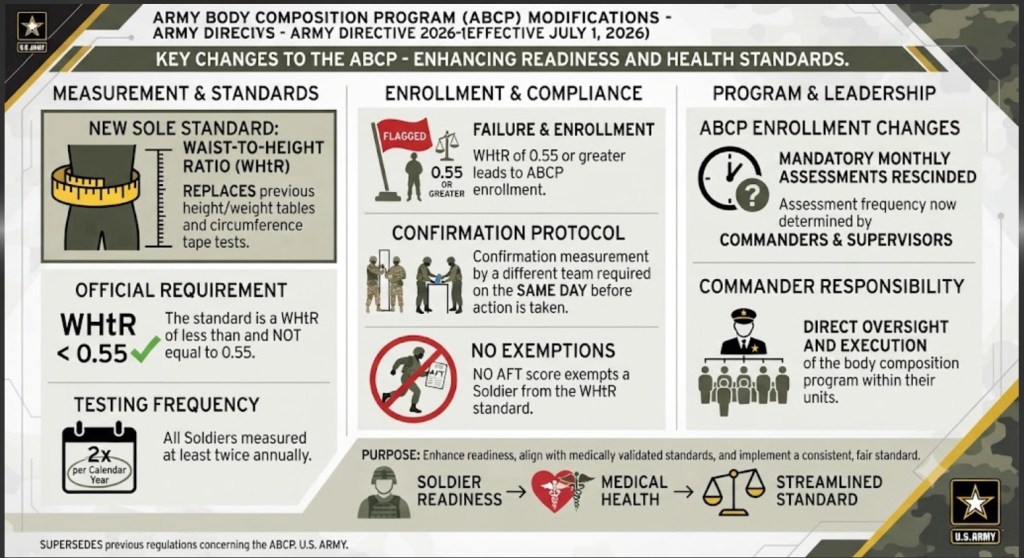
Time to lock in because I have always make weight but not sure I’ll so comfortably pass WHtR.
-
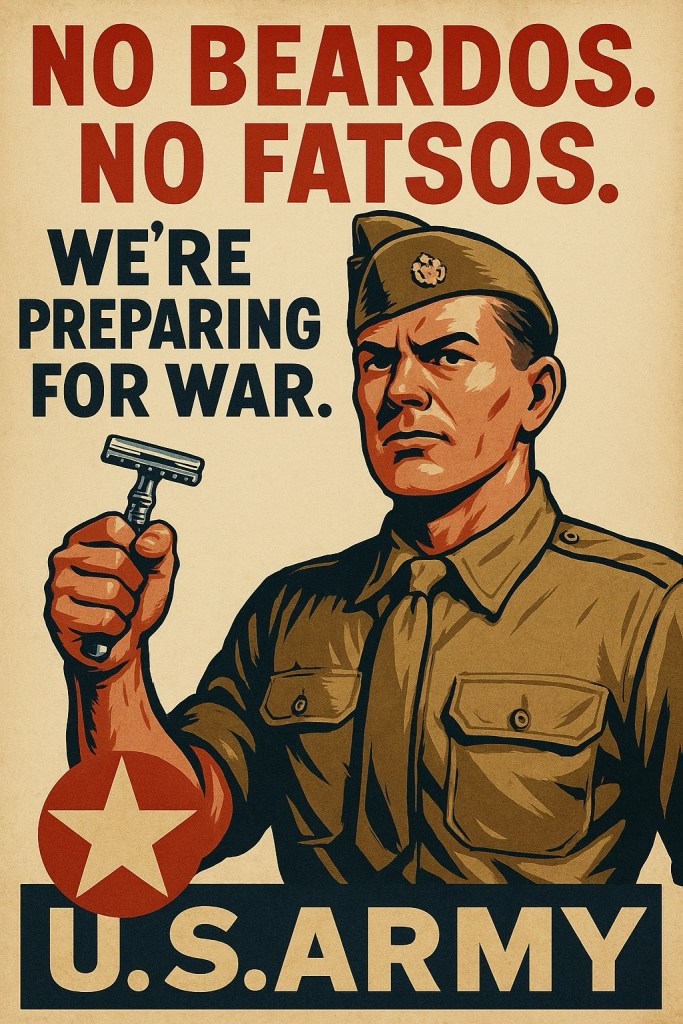
No Beardos, No Fatsos
I found myself watching SecWar hold court with his senior commanders and declare:
“No beardos. No fatsos. We’re preparing for war.”Every generation rediscovers the idea that discipline should look a certain way—trim, pressed, and uniform. There’s a timelessness to holding the line on standards, but also something predictable about how easily we drift from them when no one’s watching.
Pick your battles. Appearance feels like the easiest one to win.
You can’t fix global supply chains or force readiness from a memo—but you can order everyone to shave.So here’s to the next great Department of War directive—issued with confidence:
“Effective immediately: No beardos. No fatsos. No exceptions.”
Somewhere, an auditorium of generals remains perfectly still.
Division deepens—whether generational, ideological,
or simply among those still learning to be strict with self
and forgiving of others.
Gel, cream, or are you a dreaded dry guy?
-
The Tandem Delay Principle
Delayed, But Not Off Track
It’s been a while since I’ve gotten the opportunity to sit down and write a blog—
Strike that.
It’s been a while since I’ve buckled down and made the time to write one.Right now, I’m parked in a corner of the Columbia, South Carolina airport, waiting on a short connection to Charlotte. I find myself in Columbia about 8 or 9 times a year, and despite the proximity, it rarely works out for me to fly in and out smoothly. The connections are tight. The delays are common. The convenience is… questionable.
Tonight’s flight is delayed two hours. Normally, that would spell disaster for catching my next leg home. But—plot twist—that flight is also delayed. So here I sit, somehow still on track despite the fact that everything around me is running behind.
The Tandem Delay Principle
It made me think about complex problems at work. About projects, operations, and plans that depend on multiple moving parts. Sometimes, despite delays or detours, the whole thing still works if everything is moving in tandem.
In other words: you’re not necessarily behind just because you’re not on your original timeline.
In fact, sometimes things slow down just enough for you to catch up. Or for everything to align in a way that wasn’t forecasted, but still works.
This Applies to More Than Travel
Whether it’s coordinating cross-functional teams, juggling timelines with multiple stakeholders, or trying to lead an organization through change—this is a reminder I need more often than I’d like to admit:
Progress doesn’t always look like forward motion.
Sometimes it looks like staying aligned—even if that alignment is happening in slow motion.
Final Thought
I’m not sure if I’ll make it home tonight. But I’ve got a window open right now to reflect, to write, and to reframe what “delay” really means.
Sometimes, the plan still works.
Even when nothing’s on time.
Especially when nothing’s on time. -
Drowning Slowly Is a Skill
I’m sitting at the pool, watching my three-year-old swim. She’s had lessons—plenty, actually—and in theory, she knows what to do. But watching her now, flailing in a way that looks almost coordinated, I can’t help but realize: those lessons have given her confidence, not competence.
She’s not swimming. She’s drowning slowly.
And honestly? That’s a skill.She can survive just long enough for her safety net—me—to scoop her back to safety. She’s not panicking. She believes in herself. She trusts the water. And she trusts that someone’s watching.
And that got me thinking…
The Fine Art of Drowning Slowly
Most of us are doing some version of the same thing every day. We’re mostly okay.
We’ve had some training, we’ve read the right books, listened to the podcasts, subscribed to the newsletters. We’ve learned just enough to stay afloat—barely—but not enough to feel like we’re swimming with power and control.Leadership, parenting, managing, staying in shape, trying to make good decisions—sometimes it all feels like controlled flailing. And when you’re in that state long enough, you start to realize…
Survival isn’t about mastery. It’s about trust, timing, and having a safety net when things go sideways.
Confidence Before Competence
There’s something interesting about how kids learn—confidence often comes before competence. They throw themselves in, sometimes literally, assuming they’ll figure it out midair. Adults? We tend to overthink, hesitate, and look for guarantees before taking the leap.
The Role of the Safety Net
For my daughter, it’s me—watching, waiting, arms ready to catch her.
For us? It might be a mentor. A spouse. A solid teammate. A friend who notices the flailing and doesn’t judge it.Drowning slowly isn’t a crisis if someone’s watching and ready to step in when needed. It’s how we learn.
So What’s the Takeaway?
Sometimes you’re not going to look graceful. You’re not going to have a flawless stroke or perfect form.
But if you’ve got the guts to jump in, the humility to know you’re not fully there yet, and a few people who’ve got your back—
You’re doing better than you think.
Closing Thought
So yeah, drowning slowly is a skill.
It’s what gets us from the shallow end of “I have no idea what I’m doing” to the deep end of “Okay, I might not have it all figured out, but I’m still afloat.”Just keep flailing. The safety net’s watching.
-
A Month with Meditations for Mortals
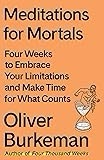
Over the past month, I’ve been working my way through Meditations for Mortals by Oliver Burkeman—a daily-read, four-week “retreat of the mind” designed to help readers reframe perfectionism, reflect on how they spend their time, and release the illusion of total control.
The idea is simple: one meditation per day. Reflect, question, absorb. It’s not about hacking your habits—it’s about softening your grip on the wheel.
What the Book Aims to Do
Burkeman makes no secret of his thesis, and he repeats it often (maybe too often):
“You’re never going to sort your life out.”
The purpose isn’t despair. It’s permission—to stop trying so hard to win an unwinnable game. As he puts it:
“When you give up the unwinnable struggle to do everything, that’s when you can start pouring your finite time and attention into a handful of things that truly count.”
What Worked for Me
🧠 The Myth of Mastery
“Imposter syndrome… the belief that there’s a basic level of expertise that pretty much everyone else has attained, but that you haven’t.”
As someone juggling professional, military, family, and fitness roles, while having friends knocking these out of the park, it’s easy to assume others are operating from some secret playbook. Burkeman reminds us: we’re all winging it—just at different altitudes.
One of the things Burkeman and a lot of others neglect to mention about imposter syndrome… It may not be a lack of individual confidence, but rather an oversized perception of the importance of the role/job we are assuming.
🕰️ You Will Never Get Caught Up—And That’s Okay
“The incoming supply of things that feel as though they genuinely need doing isn’t merely large, but to all intents and purposes infinite.”
This is the managerial version of chasing inbox zero, only to find that inbox infinity creeps in from the side door. Burkeman encourages you to stop fighting entropy and start choosing your battles.
I try to prioritize tasks weekly and daily, but I still find myself addressing every email even in the quiet hours of the morning and feeling the pressure of ‘missing’ information.
🧭 Freedom in Limitation
“The result will be freedom… not freedom from limitation, but freedom in limitation.”
This distinction gave me language for something I’d felt but hadn’t articulated: leadership and adulthood aren’t about avoiding trade-offs, they’re about owning them. True agency isn’t unlimited options—it’s thoughtful selection.
🔄 The Power of “Good Enough”
“When you no longer demand perfection… that’s when you’re free to plunge energetically into them.”
Perfectionism, especially in high-tempo leadership environments, can quietly strangle creativity and confidence. Letting go of “ideal” makes space for real effort—and progress.
What Didn’t Land as Well
While I appreciated the rhythm of daily reading and the permission to slow down, I struggled with a few things:
- Continuity across my roles: The book lacked a throughline that connected the meditations to how I operate as a manager, a leader, a parent, or even a fitness junkie.
- Tone: At times, the tone felt overly self-assured or heavy-handed—like Burkeman was hammering a point that already landed.
- Abstraction drift: Occasionally, the book drifted too far into philosophical abstraction when I craved something more tactical.
A Few Favorite Highlights
- “Treat your to-do list like a menu.”
- “You’re pretty much free to do whatever you like. You need only face the consequences.”
- “What does life want from me right now?”
- “Being kinder to yourself isn’t a cop-out. It’s a strategy.”
- “Pay yourself first—with time.”
Final Thoughts
Meditations for Mortals gave me a lot to think about—even if it didn’t always speak to every corner of my life. It’s not a guidebook or a system. It’s a permission slip. A reminder that the game isn’t to win life, but to live it—intentionally, meaningfully, and maybe with a little more ease.
If you’ve ever felt like you’re just one productivity hack away from peace of mind, this book offers a refreshing (if slightly smug) reality check:
You’re not behind. You’re just human.Glad I read it… Not only should we cut ourselves slack, but remember that others probably deserve our patience as they similarly struggle. Strict with self, and patient with others—like some old guy Marcus said.
-
A Good Guy’s Guide to Being the ‘Bad Guy’
Lately, I’ve been thinking about the times when, as a manager, I have to deliver bad news, make tough calls, or give candid feedback that I know won’t be popular. Let’s be honest: being the “bad guy” is a necessary part of leadership—but as a self-proclaimed “good guy,” it’s not always easy for me to flip that switch.
But here’s the thing: being the bad guy isn’t about being a jerk. It’s about having the guts to do what needs to be done to move the team, the mission, and the organization forward. So here’s how I’m learning to rip the band-aid off—while staying true to myself.
Why the ‘Bad Guy’ Is Sometimes Necessary
The reality is, teams thrive on accountability. Sometimes that means hard conversations that sting a little—especially when someone isn’t meeting the mark or when change is needed.
I’ve learned (usually the hard way) that avoiding those conversations only makes things worse. When I dodge tough talks, problems fester, and morale or performance actually declines.
Being the bad guy doesn’t mean you’re being mean or disrespectful. It means you care enough to be honest—and that you’re willing to prioritize growth over comfort, for both the individual and the team.
The Art of Ripping the Band-Aid Off
Here’s the tough part: procrastination is a killer. The longer I wait, the harder it gets—and the more dramatic the fallout.
So I’ve tried to make “just rip the band-aid off” my personal mantra. That means:
- Own the moment. Don’t circle the issue or sandwich it between compliments—just get to the point with empathy.
- Separate emotion from action. It’s not about being mean or making it personal—it’s about being clear, decisive, and respectful.
- Script it (but don’t sound like a robot). I’ll often jot down key points to keep the conversation on track. That way, I don’t lose sight of the message.
A Lesson from the Front Lines
Let me give you a recent example. I had an employee—let’s call her “the office crab”—who slowly expanded into a workspace she wasn’t authorized to use. Like a crab taking over a tide pool, she made herself right at home.
Instead of addressing it early, I delayed the tough conversation. I told myself I was “considering all the angles,” but in reality, I was procrastinating because I didn’t want to be the bad guy.
When I finally sat down with her to explain she’d need to relocate, she was caught completely off guard. I also had to coordinate with the union to document that her work environment was changing, which added extra layers of complexity.
Worse, the delay created friction with other employees—some at higher grades—who were sitting in cubicles and couldn’t help but notice the inconsistency. My hesitation didn’t just affect her; it rattled the team.
Lesson learned: delaying the tough talk doesn’t make it go away. It usually makes it harder for everyone.
Know Your People (And the Context)
Every team is different—and every person on that team is different too. Some people appreciate blunt feedback. Others need a softer approach with a bit of a warm-up.
I also try to pay attention to the organizational dynamics. A single piece of feedback can ripple through the office in ways you don’t expect. So before I go full “bad guy,” I ask myself:
- “Who else might be impacted by this conversation?”
- “What’s the best way to ensure clarity without creating unnecessary drama?”
Lead with Empathy, Follow with Action
Being the bad guy doesn’t mean forgetting the good guy inside you. Even when I’m delivering tough news, I try to:
- Acknowledge the human side. “I know this is frustrating” or “This isn’t easy to hear.”
- Communicate the why. “Here’s why this matters and how it affects the team.”
- Set a path forward. “Here’s what success looks like from here.”
That final step—charting a path forward—makes the difference between being the bad guy who tears people down and the one who helps them get better.
Staying True to Yourself
Here’s the kicker: just because you have to be tough doesn’t mean you have to be heartless. People respect honesty, but they also respect consistency and fairness.
Being the bad guy is a leadership role—not a personality trait. If you consistently show up with integrity—even when it’s hard—people will trust you more in the long run. They’ll know you’re not just about power plays; you’re about making things better.
Conclusion
Being the bad guy isn’t about wielding authority—it’s about having the courage to do the hard things that make a team stronger.
Every time I’ve had to be the bad guy, I’ve learned a little more about leadership, about myself, and about the people I work with. And, ironically, it’s often led to better trust and respect down the line.
So if you’re a manager wrestling with this too, know that you’re not alone. Take a breath, rip the band-aid off, and remember: it’s not about being a villain—it’s about being the leader your team deserves.
-
The Water We Swim In: From Complaining to Commiserating
From DFW
“There are these two young fish swimming along, and they happen to meet an older fish swimming the other way, who nods at them and says, ‘Morning, boys. How’s the water?’ And the two young fish swim on for a bit, and then eventually one of them looks over at the other and goes, ‘What the hell is water?’”
David Foster Wallace told this story to illustrate the most obvious, important realities that are often the hardest to see and talk about. Today, I want to talk about the water we’re all swimming in – the constant current of human dissatisfaction, frustration, and shared struggle. But more importantly, I want to talk about how we navigate these waters together.
Because there’s a profound difference between complaining about the water and recognizing that we’re all swimming in it together.
The Invisible Current of Human Experience
We live in an age of perpetual complaint. Social media feeds overflow with grievances. Coffee shops buzz with grumbling. We complain about traffic, weather, politics, work, relationships – the list is endless. But here’s what Wallace understood: the real question isn’t whether we’ll encounter frustration and difficulty. The question is how conscious we are of our response to it.
The water we’re swimming in is the fundamental human condition – the reality that life is often hard, unfair, and disappointing. But just like those young fish, we often don’t even recognize we’re in it.
Complaining: Swimming Against the Current
Complaining is what happens when we’re unconscious of the water. It’s our default mode – automatic, reflexive, and ultimately isolating. When we complain, we’re essentially saying, “This shouldn’t be happening to me. I deserve better than this water.”
Complaining is:
- Self-focused: It centers our personal grievance
- Blame-oriented: It seeks someone or something to fault
- Solution-resistant: It feeds on the problem rather than addressing it
- Contagious but isolating: It spreads negativity while creating distance between people
Think about the last time someone complained to you extensively. How did it feel? Draining, right? That’s because complaining creates what I call “emotional quicksand” – the more we struggle against our circumstances through complaint, the deeper we sink.
Commiserating: Swimming Together
Commiserating, on the other hand, is what happens when we become conscious of the water we’re all swimming in. It’s the recognition that struggle is universal, that difficulty is part of the human condition we share.
Commiserating is:
- Collectively aware: It acknowledges our shared experience
- Empathy-driven: It seeks connection through understanding
- Resilience-building: It strengthens our capacity to navigate challenges
- Healing and bonding: It creates genuine human connection
When we commiserate, we’re saying, “Yes, this water is cold and rough sometimes. I see that you’re struggling with it too. We’re in this together.”
The Transformation: From “Why Me?” to “We Too”
The shift from complaining to commiserating requires what Wallace called “a choice about how to think.” It demands conscious awareness of our default settings and deliberate practice in choosing a different response.
This isn’t about toxic positivity or pretending everything is fine. It’s about recognizing that our individual struggles are part of a larger human story. When your commute is terrible, instead of just complaining about traffic, you might acknowledge that thousands of other people are sitting in the same frustration right now – and that recognition can transform isolation into connection.
The Neuroscience of Shared Struggle
Research shows us that when we shift from complaint to commiseration, something remarkable happens in our brains. Complaining activates our stress response and reinforces neural pathways associated with negativity and helplessness. But when we engage in genuine commiseration – acknowledging shared difficulty with empathy – we activate our social bonding systems and build psychological resilience.
Studies on social support reveal that it’s not the absence of problems that creates well-being, but rather the presence of understanding connection in the face of those problems.
Practical Wisdom: Swimming Lessons for Daily Life
How do we make this shift in our daily lives?
Listen for the water: Start noticing when you or others are complaining. Ask yourself: “Are we just thrashing against the current, or are we acknowledging the reality of our shared experience?”
Change your language: Instead of “This always happens to me,” try “This is really challenging, and I imagine others struggle with this too.” Instead of “People are so stupid,” try “We’re all trying to figure this out.”
Seek connection, not solution: Sometimes the goal isn’t to fix the problem immediately, but to feel less alone in facing it.
Practice conscious attention: As Wallace reminded us, the real education is learning how to think, how to choose what to pay attention to. Choose to see the humanity in shared struggle.
The Deeper Current: What We’re Really Swimming Toward
Here’s the profound thing about shifting from complaint to commiseration: it changes not just how we handle problems, but how we understand our fundamental purpose as human beings. When we recognize that we’re all swimming in the same challenging waters, we stop fighting the current and start swimming together toward something larger than our individual grievances.
We swim toward compassion. Toward understanding. Toward the recognition that our struggles, when shared consciously, become sources of connection rather than isolation.
Closing: The Choice We Make Every Day
David Foster Wallace ended his speech by saying, “It is about the real value of a real education, which has almost nothing to do with knowledge, and everything to do with simple awareness.”
Every day, we choose how to navigate the waters of human experience. We can complain our way into isolation, thrashing against currents that affect us all. Or we can commiserate our way into connection, acknowledging that while the water may be rough, we’re not swimming alone.
The water is still water. The struggles are still real. But when we’re conscious of it, when we name it together, when we stop pretending we’re the only ones getting wet – that’s when we discover that the water we thought was drowning us might actually be buoying us up.
The fish who knows about water swims differently than the fish who doesn’t. And the human who understands the difference between complaining and commiserating? They live differently too.
Thank you for coming to my Ted Talk
-
The Human Draft: Putting Your Ideas on Paper Before Leveraging Artificial Intelligence
There’s a growing temptation in the workplace to offload the heavy lifting of thinking directly onto AI tools. I saw this play out firsthand during a recent professional education course.
Instructors would pose a question or assignment, and almost immediately, my peers fed the prompt straight into ChatGPT. Seconds later—boom—a neatly packaged, grammatically correct, perfectly bland response appeared. And then another. And another.
Here’s the problem: it was all the same. Slight variations on a theme, but no originality, no personal voice.
Meanwhile, a few of us took a different approach. We sat with the question for a while. Sketched some messy notes. Doodled an outline. Let the ideas bounce around in our own heads first. Then we brought LLMs into the process—not to create the idea, but to help us shape it, tighten it, and refine the language.
The result? Unique answers. Personal perspectives. Work that actually sounded like the human being behind it.
Three Hard Truths About AI and Human Work
1. Don’t Skip the Hard Part—Thinking.
AI is a phenomenal tool for refinement, but it’s a terrible substitute for original thought. If you start with the machine, you’ll always get machine-like answers.
Your brain still needs to do the heavy lifting. Get the raw ideas down first—ugly, incomplete, and unpolished if necessary. Then let AI help smooth the edges.
2. Over-Reliance on AI Will Erode Creativity.
Like any muscle, if you stop using your creative faculties, they’ll atrophy. Creativity doesn’t emerge from perfect prompts—it comes from wrestling with ideas, sitting in ambiguity, and making connections AI can’t.
Let the machine assist, but don’t hand over the creative reins.
3. Don’t Be Replaceable. Don’t Let the Machines Win.
If your entire workflow consists of copy-pasting prompts and accepting the first response, you’re training yourself to be replaceable.
The future belongs to people who can combine human creativity with AI efficiency—not people who outsource their thinking entirely.
Where This Shows Up
I’ve sat in too many meetings where people show up with beautifully formatted slides… and absolutely no original thought behind them. The “solution” looks great on paper, but it’s hollow—regurgitated templates with no consideration for the actual people, teams, or missions involved.
Real work isn’t about producing content faster—it’s about producing content that matters. It’s about taking the time to wrestle with hard decisions, to consider second- and third-order effects, and to inject your own values and perspective into the work.
So whether you’re briefing a general officer or collaborating with your team, remember this: the people in the room aren’t looking for the perfect AI-polished slide. They’re looking for someone with the courage to think, decide, and stand behind their own ideas.
Start with the human draft. That’s where real leadership begins.
-
Managers should be practicing with AI
Today I’m sitting at a trampoline park, watching my daughters play, and hopefully get exhausted while casually “conversing” with ChatGPT on my phone.
Over the past few weeks, I’ve been much more deliberate in how I use the tool. I’ve framed different areas of my life—professional, military, family, personal goals—into distinct projects and threads. I’ve been exploring what ChatGPT can actually assist with, and one realization has really stuck with me:
Managers need to be leveraging AI and large language models, because they provide excellent “reps and sets” for key leadership skills—especially giving clear instructions, clarifying intent, and anticipating the questions you’ll inevitably get when leading a team.
When you interact with a large language model like ChatGPT, you quickly see that vague instructions lead to vague or confusing outputs. It forces you to be sharper: to spell out what’s important, to think about the next question, and to clarify your expectations up front. These are the same skills that make or break communication with your actual team.
Sometimes after meetings, I realize I didn’t deliver a message as effectively as I thought—maybe because of my humor or sarcasm, or maybe because I didn’t explain things simply enough. Working with ChatGPT has helped me slow down and be more intentional with my communication.
Another unexpected benefit? Reflection.
I’ve been using ChatGPT to plan my mornings, set my daily focus, and close out my days with simple reflection prompts: what went well, what didn’t, what I’m grateful for. It’s made journaling—something I’ve struggled to stay consistent with—easier and quicker, which means I actually do it.
I wouldn’t say I’m “going all in” on AI, but it has made these small habits more feasible, and in turn, it’s helping me become a bit better every day.
One thing I should mention: I’m currently going through a professional education course as a federal civilian, and I’ve noticed how many classmates are using AI to help inform class discussions. Honestly, it gave me some hesitation. I don’t want to overly rely on a tool for interpersonal thinking or human interactions. But it’s also pushed me to explore what’s possible—while still staying authentic to my own voice and style.
Bottom line: ChatGPT doesn’t replace leadership. But it’s an excellent training partner if you want to get better at the fundamentals.
-
Subscribe
Subscribed
Already have a WordPress.com account? Log in now.
 Ben Sloot